
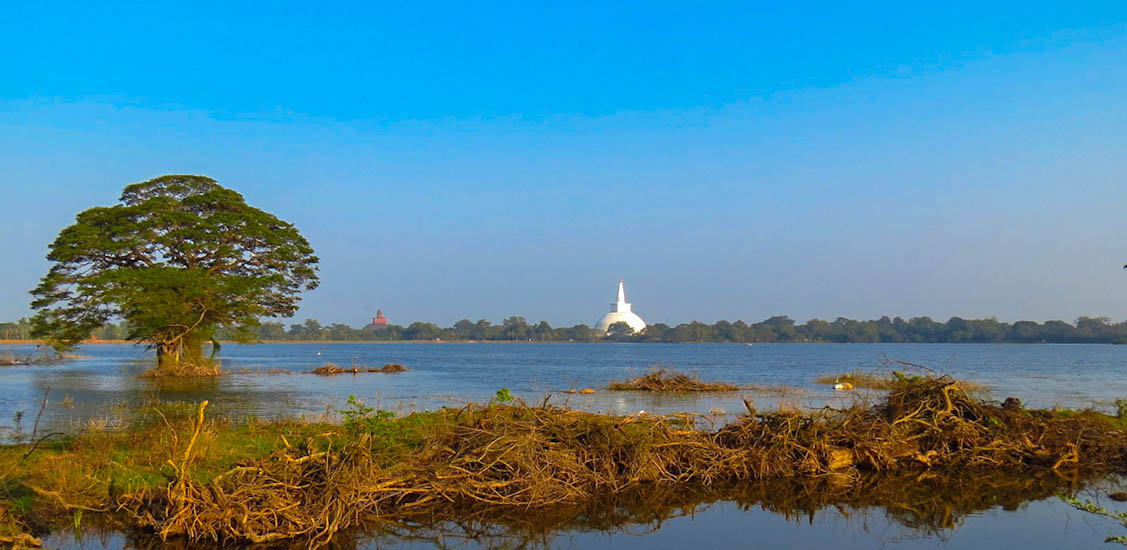
ANURADHAPURA TRAVEL GUIDE:DISCOVER THE ANCIENT CAPITAL OF SRI LANKA
Welcome to this comprehensive Anuradhapura travel guide. A significant city in Sri Lanka’s north central plain, Anuradhapura is located 205 kilometers north of the present-day capital, Colombo
Ceylon maintained Anuradhapura as its governmental and religious center for 1,300 years. Then, disaster struck An invasion in 993 forced its complete abandonment.
Thick rainforest hid the magnificent location—complete with palaces, monasteries, and monuments—for centuries. Today, travelers can easily reach it once again.
Founded in the fifth century BCE, Anuradhapura served as Sri Lanka’s Sinhalese capital from the fourth century BCEuntil invasions from South India forced the kingdom to relocate its capital in the eleventh century CE.
Among the greatest and oldest Buddhist monuments in the world are the ruins in the UNESCO world heritage city of Anuradhapura . Anuradhapura has literally dozens of amazing things to see, and a trip to this magnificent location ought to be at the top of any plans for Sri Lanka.
We suggest spending one or two nights in Anuradhapura to fully appreciate its stunning historical sites. Alternatively, travelers with a busy schedule can easily visit on a day trip from Sigiriya or Dambulla.
Why You Must Visit Anuradhapura
As you plan out your itinerary using this Anuradhapura travel guide, you will find a number of places known as Atamasthana, or Eight Sacred Places.
Jaya Sri Maha Bodhiya, Ruwanwelisaya, Thuparamaya, Lovamahapaya, Abhayagiri Dagaba, Jetavanarama, Mirisaveti Stupa, and Lankarama are the names of the hallowed locations.
The capital of the former Anuradhapura Kingdom, Anuradhapura, is where they are located.
Must-See Sites in Anuradhapura
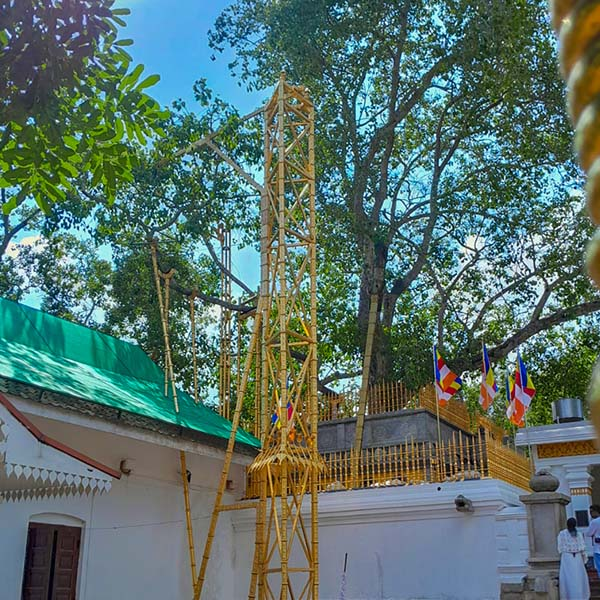
JAYA SRI MAHA BODHI TREE -THE SECRET BOO TREE
The Mahamewuna Garden in the historical city of Anuradhapura, Sri Lanka, houses the Jaya Sri Maha Bodhi Tree, a sacred historical bo tree.
This specimen is grown from a cutting of the original Sri Maha Bodhi tree in Buddha Gaya, India—where Siddhartha Gautama attained enlightenment before Emperor Ashoka’s soldiers destroyed it.
Subsequently, Emperor Ashoka’s daughter, the nun Sangamitta Maha Theri, brought the tree cutting to Sri Lanka in 236 BC while King Devanampiya Tissa was ruling.
Now over 2,300 years old, it remains the oldest living human-planted tree with a confirmed planting date.
THE SAMADHI BUDDHA STATUE
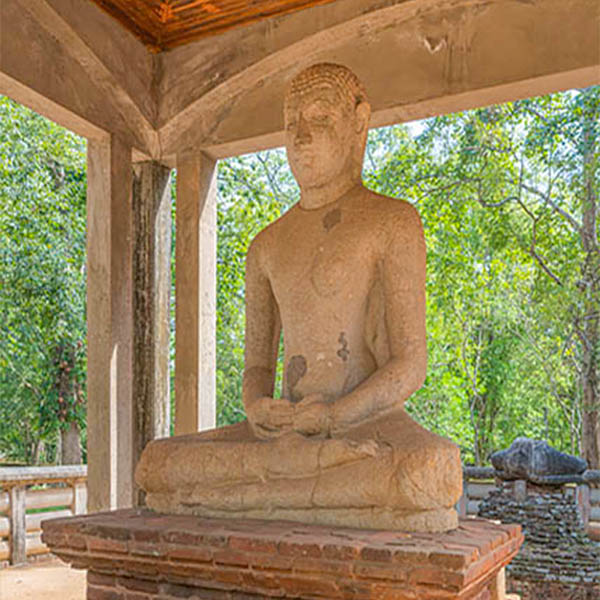
Mahamevnawa Park in Anuradhapura, Sri Lanka, proudly houses the famous Samadhi Buddha statue.
Sculptors carved this 7-foot-3-inch figure from dolomite marble. It depicts the Buddha in the Dhyana Mudra, the sacred meditation posture linked to his first enlightenment.
THE RUWANWELI MAHA SEYA
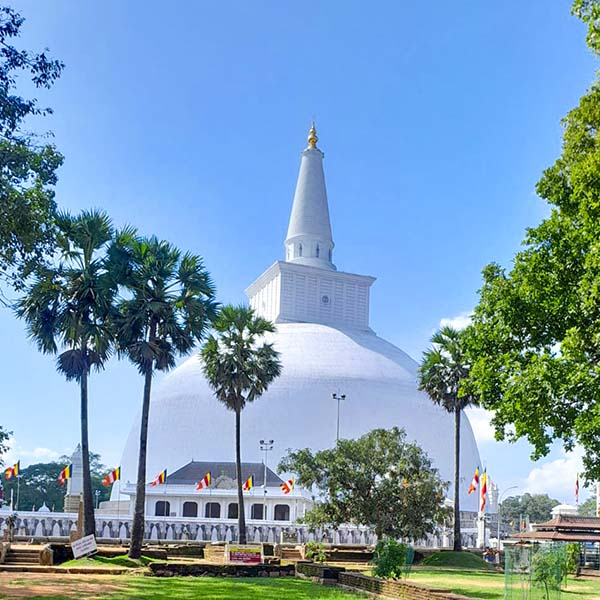
The Ruwanweli Maha Seya, also known as the Maha Thupa or the Great Stupa, is a magnificent stupa in Anuradhapura, Sri Lanka.
This sacred site holds two quarts—or one “dona”—of the Buddha’s relics, which forms the largest collection of his relics anywhere in the world.
Furthermore, historians celebrate the Ruwanwelisaya Dagoba as an icon of ancient Sri Lankan architectural glory and the island’s oldest stupa. The victorious King Dutugemunu built the monument in 140 BC.
While the original structure reached about 55 meters in height, subsequent kings expanded and renovated it over the centuries. Today, the impressive stupa stands proudly at 107 meters tall and 93 meters in diameter.
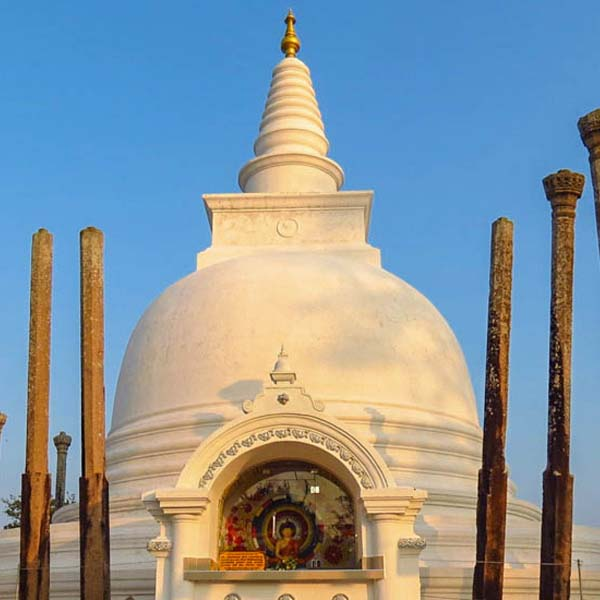
THUPARAMAYA STUPA
Mahinda Thera introduced Theravada Buddhism and Chaitya worship to Sri Lanka after King Ashoka sent him. He has a close historical connection to Thuparamaya.
King Devanampiya Tissa built Thuparamaya at Mahinda’s request to enshrine the Buddha’s right collarbone, making it the island’s first stupa.
Builders designed the Thuparamaya dagoba in the shape of a bell to mark the formal arrival of Buddhism. Its name combines ‘stupa’ with ‘aramaya,’ designating a residential complex for monks.
Stone pillars indicate that a conical-roofed vatadage once sheltered the central structure within this covered space.

Kuttam Pokuna-The Twin Ponds of Anuradhapura
Experts fully restored the ponds and their surrounding compound wall between 1950 and 1955
While exploring these ancient twin ponds with any standard Anuradhapura ancient city guide, visitors will discover Kuttam Pokuna—a pair of carefully conserved historical bathing pools in Sri Lanka. Sinhalese engineers created these two remarkable ponds during the ancient Anuradhapura Kingdom. Today, they stand as a brilliant testament to the hydrological engineering, architecture, and artistic mastery of the ancient era.
LOVAMAHAPAYA
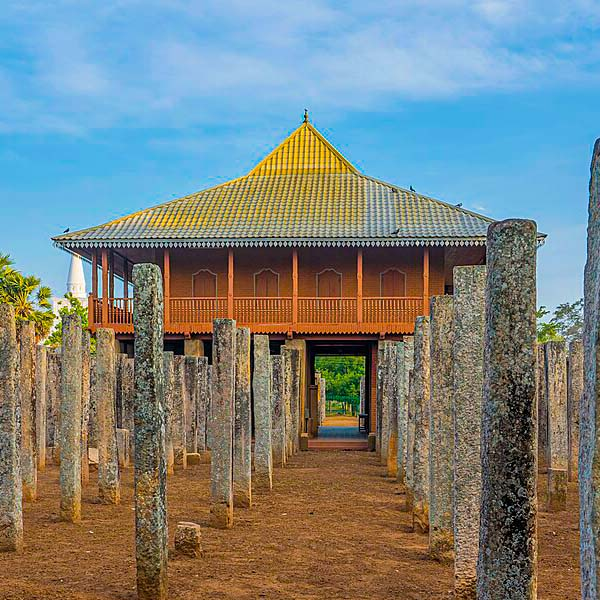
Lovamahapaya stands between Ruwanweliseya and Sri Mahabodiya in the ancient city of Anuradhapura, Sri Lanka. People also call it the Brazen Palace or Lohaprasadaya because workers covered its roof with bronze tiles.
In ancient times, King Devanampiya Tissa built an uposathagara on this site. After that original structure fell into ruin, builders constructed the present building. It featured a refectory and an uposathagara, alongside a Simamalaka where the Sangha gathered on Poya days to recite the confession sutra.
Historians describe the famous Lohaprasada—built by King Dutugemunu—as a magnificent nine-story edifice belonging to this class of structures.
JETAVANARAMA STUPA
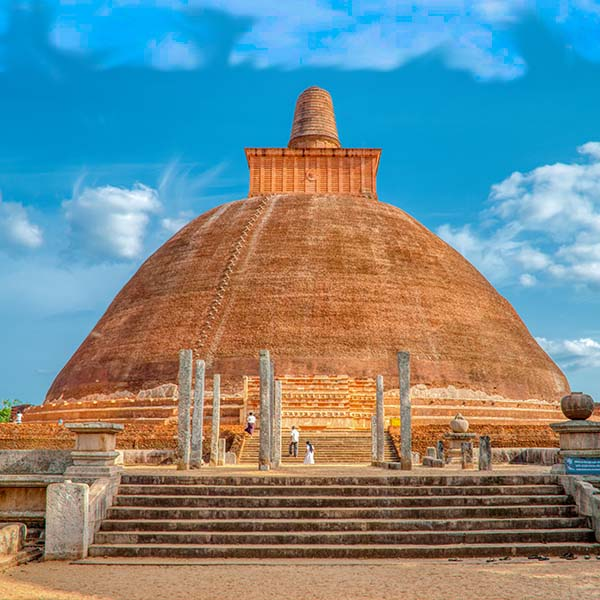
The Jetavanarama stupa, or Jetavanaramaya, rises within the ruins of the Jetavana monastery in the UNESCO World Heritage city of Anuradhapura, Sri Lanka.
When King Mahasena of Anuradhapura (273–301) built it, the 122-meter monument stood as the world’s tallest stupa and the third tallest structure globally. King Mahasena initiated its construction following the destruction of the Mahaviharaya of Anuradhapura.
Afterward, his son, Kithsirimevan, completed the project, and Parakramabahu I of Polonnaruwa later renovated it. Devotees believe that a piece of a belt tied by the Buddha serves as the sacred relic enshrined here.
The compound spans approximately 5.6 hectares and once accommodated an estimated 10,000 Buddhist monks.
ABHAYAGIRI DAGABA
Abhayagiri Vihāra served as a major monastery site of Theravada Buddhism in Anuradhapura, Sri Lanka, ranking among the world’s most extensive ruins and the nation’s most sacred Buddhist pilgrimage centers.
Consequently, ancient chronicles record that King Valagamba established the Abhayagiri Dagaba during his second reign from 89 to 77 B.C.E. Moreover, according to the Mahavamsa, the name Abhayagiri Vihara combines King Vattagamani Abhaya’s name with that of Giri, a Jain monk who formerly lived at the monastery site.
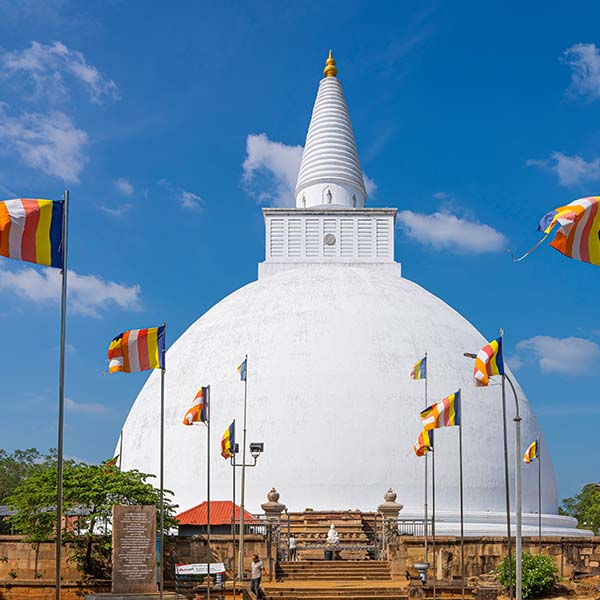
MIRISAVETI STUPA
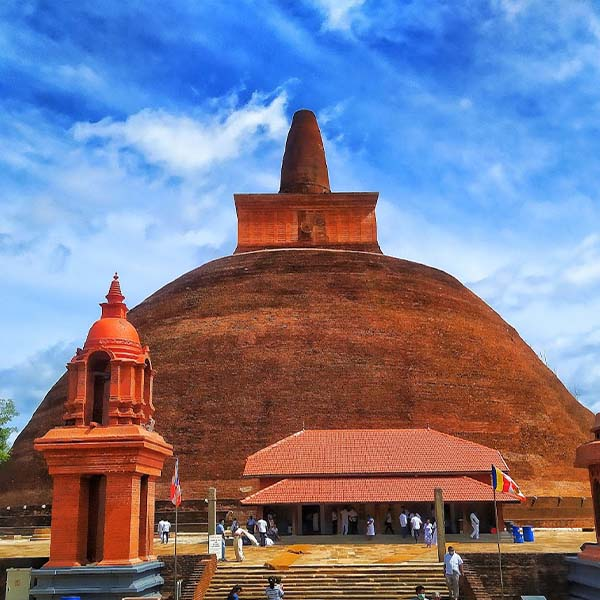
The Mirisaweti Stupa is a memorial building, a stupa, situated in the ancient city of Anuradhapura, Sri Lanka. King Dutugamunu built the Mirisaveti Stupa after defeating King Elara. 161 BC to 137 BCA After placing the Buddha’s relics in the scepter,
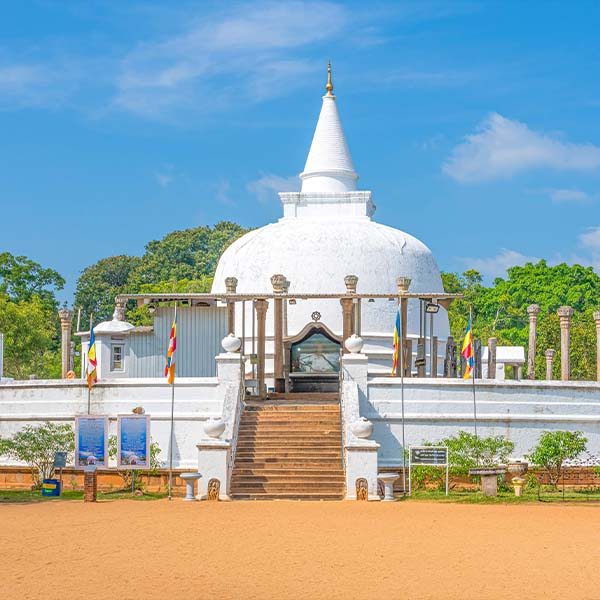
LANKARAMA PAGODA
King Valagamba built the Lankarama stupa within the ancient kingdom of Anuradhapura, Sri Lanka. Historians know nothing about its original form because later rulers renovated the structure entirely.
However, rows of stone pillars among the ruins prove that a protective house once encircled the monument. The stupa’s round courtyard sits three meters above ground level, featuring a stupa diameter of 14 meters and a circular courtyard diameter measuring 406 meters.
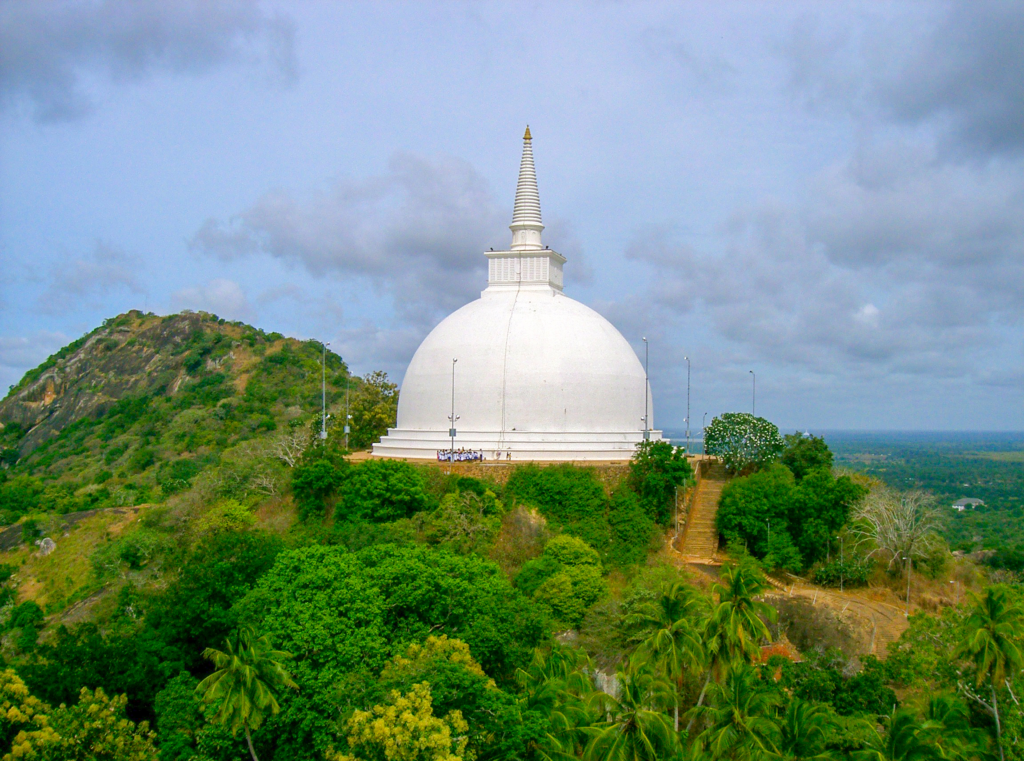
MIHINTALE PAGODA
This large stupa, known as the Maha Seya, is on the summit of the Mihintale hill, built by King Mahadathika Mahanaga (7-19 AD), the base of which is 136 ft (41 m) in diameter.
Eventually, the stupa, which was in a dilapidated condition, was completely restored.
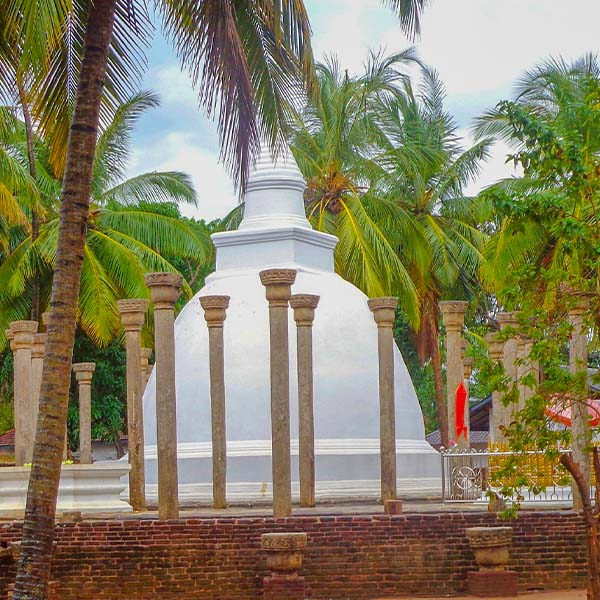
AMBASTHALA DAGOBA
Is situated on the plain close to the peak of the mountain and is said to have been built by King Makalantissa.
Additionally, the ruins show that there has been a house built encircling the stupa.
Furthermore,the Dagoba itself is said to enshrine the relics of the great Apostle Mahinda.
It is here that King Devanampiyatissa first met Arahant Mahinda.
The traditional spot where this meeting took place is marked by the Ambasthala Dagoba.
MIHINTALE ROCK
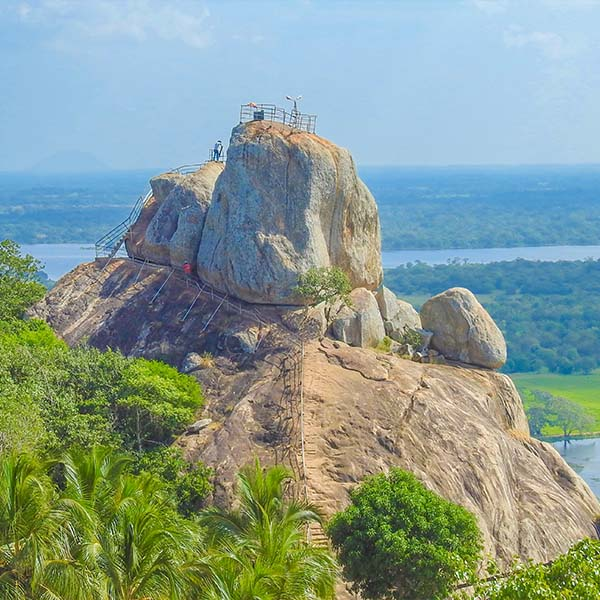
The rock, which is perched atop a hill and faces Maha Seya, is frequently visited by pilgrims.
It features iron railings to assist with climbing, even in extremely windy conditions.
Notably, according to ancient texts like the Mahavamsa, Mahinda traveled by air to reach Sri Lanka.
Subsequently, he first encountered King Devanampiyatissa when he descended and landed on the Aradhana Gala
SANDAKADA PAHANA
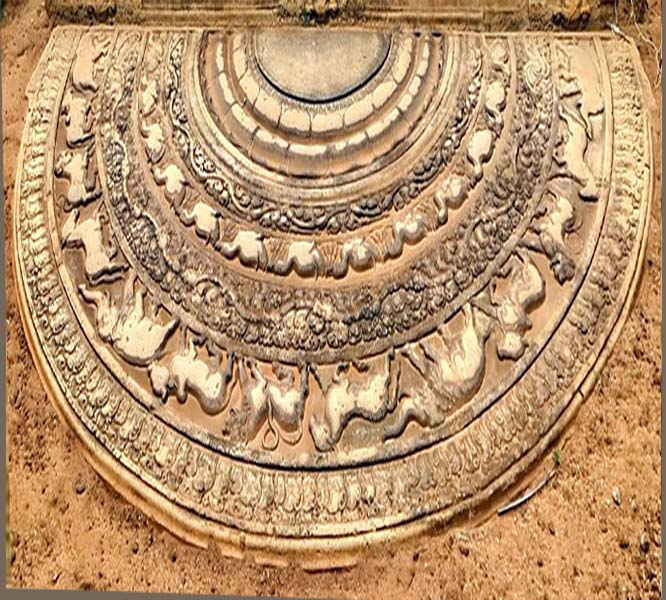
Moonstone, or Sandakada Pahana, is a distinctive aspect of traditional Sri Lankan architecture.Every sandakada pahana has the same semi-circular stone slab sculptures.
The center featured a carved half lotus surrounded by many concentric bands. A procession of swans adorns the first band from the half lotus,
which is followed by a band with a complex foliage pattern called liyavel (creeper), which stands for desire. Four animals—elephants, lions, horses, and bulls—are carved in the third band.
Specifically,these four animals following one another in a procession represent the four stages of life—birth, old age, illness, and death—or the four noble truths (chathurarya sathya).
The carving of flames in the fourth and outermost band is typically understood to symbolize the people’s suffering from passion and the never-ending cycle of existence.
Plan Your Heritage Tour-Anuradhapura Ancient City Guide
To learn more about the official preservation and global significance of these monuments, you can explore the UNESCO Anuradhapura page for detailed historical background and heritage guidelines.
Best Time to Visit Anuradhapura
A top tip in any Anuradhapura travel guide is that the best time to explore the ancient city is early in the morning (starting around 7:00 AM or 8:00 AM). You will avoid the intense mid-day heat and the peak tour bus crowds, making for a much more peaceful experience.
Tips for Your Trip– Anuradhapura travel guide
To ensure a smooth journey highlighted in every good Anuradhapura travel guide, keep these practical tips in mind
- Respect the Dress Code: Anuradhapura is a deeply sacred site.Specifically, when visiting temples and stupas, ensure your shoulders and knees are covered. Additionally, it is customary to remove your shoes and hats before entering religious areas.
- Buy Entrance Tickets: first go to Musuem there is avilable tickets for sightseeing
- Explore by Bicycle:The archaeological park is vast and spread out. Renting a bicycle is the best way to explore the ruins at your own pace, allowing you to easily move between the massive stupas and monastery complexes.
- Hire a Local Guide:The history of Anuradhapura is complex and fascinating. Hiring a licensed local guide will provide you with valuable context and stories that you won’t find on information plaques, making the experience much more meaningful.
- Stay Hydrated and Protected: You will be spending a lot of time walking on brick and stone surfaces that can get quite hot. Wear comfortable walking shoes, apply sunscreen, and always carry a reusable water bottle.
We hope this Anuradhapura travel guide helps you plan the perfect heritage tour.
Traveler-Focused” FAQ
Answer: Yes. Anuradhapura is a vast archaeological park. A private guide helps you navigate the ruins efficiently, understand the significance of the stupas, and share historical stories you won’t find in a guidebook.
Answer: Absolutely. We specialize in bespoke, expert-led tours of Anuradhapura and the Cultural Triangle. Furthermore, we handle all logistics, including transport and entry permits, thereby ensuring a seamless experience.
Answer: Yes, it is the perfect start to the “Cultural Triangle.” We often pair Anuradhapura with visits to Mihintale, Polonnaruwa, and Sigiriya to provide our travelers with a comprehensive historical experience.
A: To truly appreciate the history and scale of the “Holy City,” we recommend dedicating at least one full day. If you prefer a slower pace or wish to include Mihintale, planning for two days is ideal.
A: Yes, foreign visitors require an entry permit to access the main archaeological zones. It is recommended to purchase your tickets at the official ticketing center or through your tour operator in advance to save time.
Answer: It’s simple! You can contact us directly via our inquiry form or click the “Plan Your Trip” button below to discuss your travel dates and preferences.