
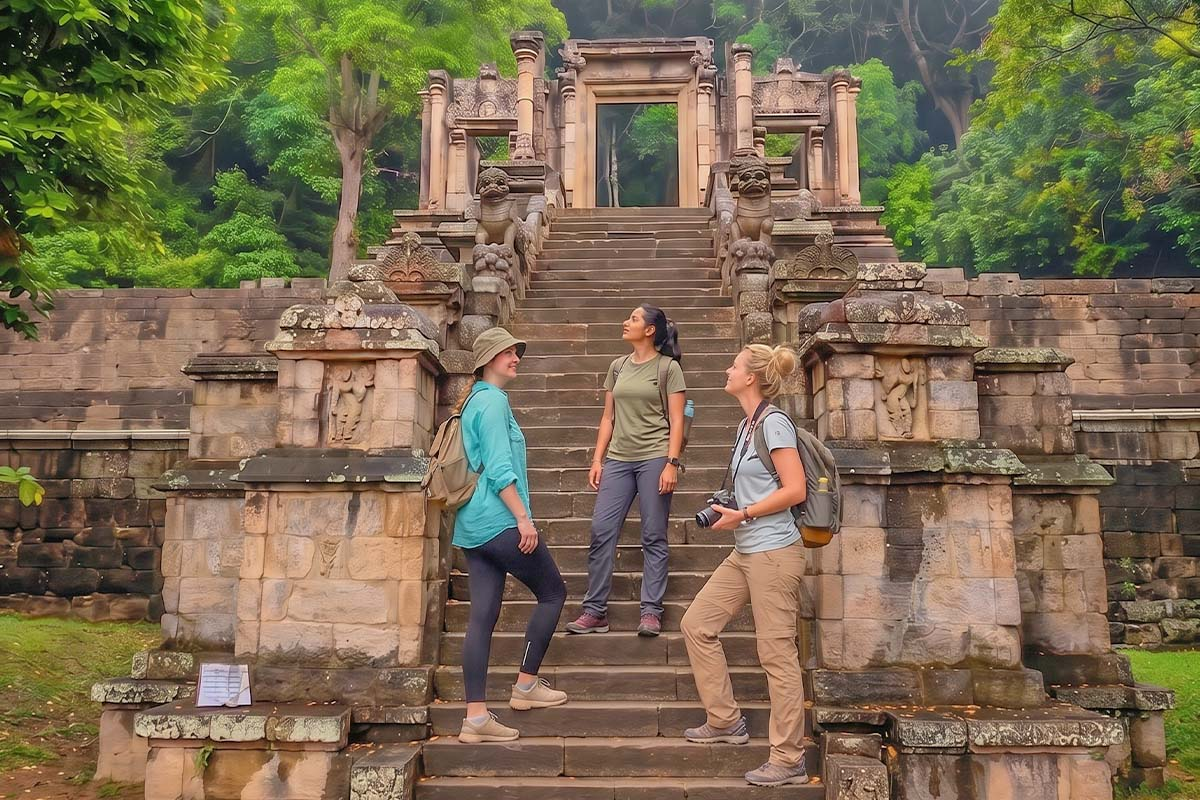
YAPAHUWA ROCK FORTRESS:SRI LANKA’S HISTORY
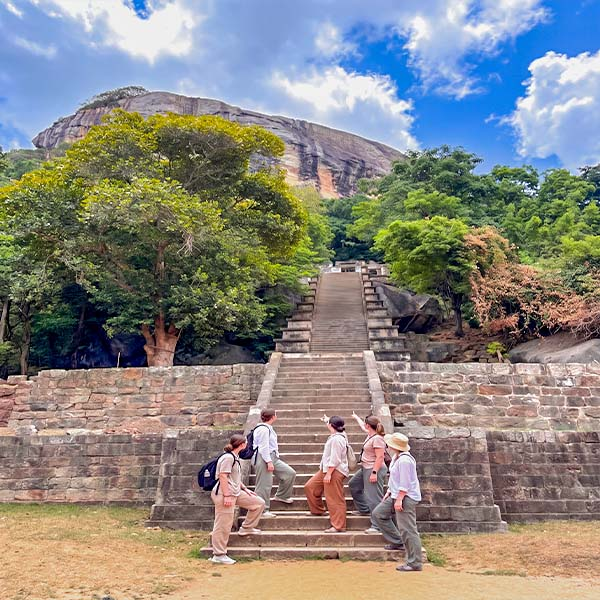
Rising 90 meters above the North-Western plains, Yapahuwa Rock Fortress is an impressive 13th-century citadel.Additionally, it features an iconic ornamental stone staircase and a rich royal history. While visitors can enjoy breathtaking panoramic views with far fewer crowds than Sigiriya.
HISTORY & SIGNIFICANCE: YAPAHUWA CITADEL RUINS
Initially, in 1272 AD, King Bhuvanekabahu I moved the capital from Polonnaruwa to the Yapahuwa Citadel Ruins because he needed to escape recurring South Indian invasions.
- The Sacred Tooth Relic: King Bhuvanekabahu enshrined the Sacred Tooth Relic of the Buddha at Yapahuwa to legitimize his rule.
- A Short-Lived Capital: Yapahuwa served as the capital for only 11 years (1272–1283 AD).Subsequent to the king’s death,Pandyan invaders captured the fortress, seized the Tooth Relic, and abandoned the complex before Buddhist monks later converted the ruins into a monastery.
The Department of Archaeology Sri Lanka legally protects Yapahuwa as an ancient monument, while the Central Cultural Fund historically supports ongoing conservation efforts.
THE ICONIC STONE STAIRCASE:YAPAHUWA CAVE TEMPLE
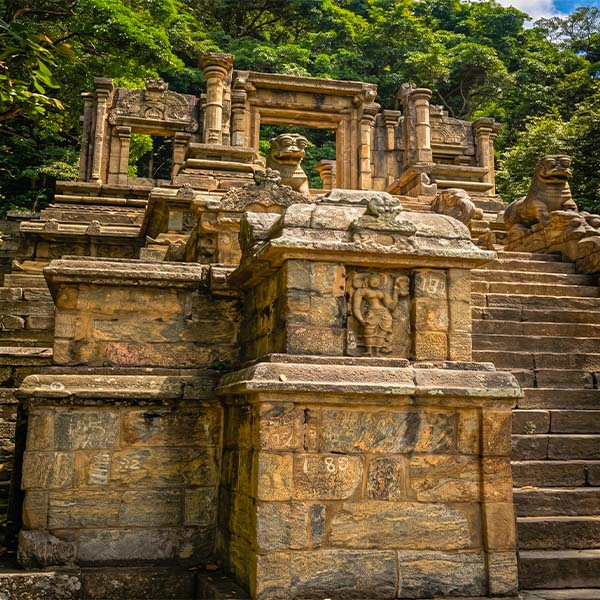
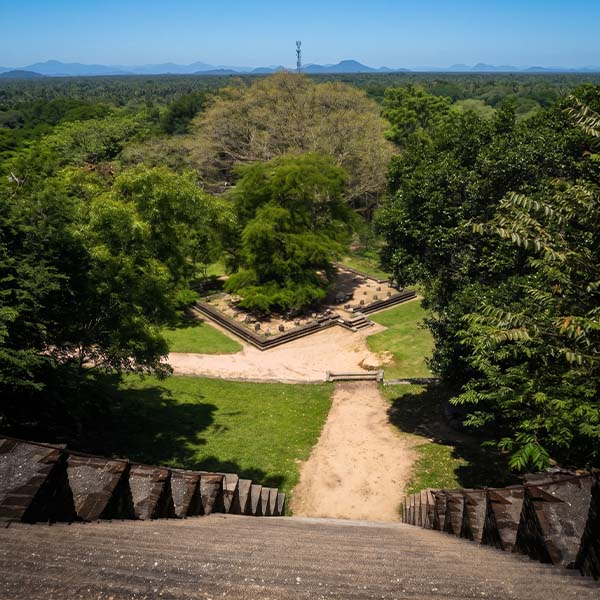
The focal point of Yapahuwa is its ornate granite staircase, which once led up to the elevated Tooth Temple and royal palace complex:
Carvings & Motifs: The tiers feature elaborate relief carvings of dancers, musicians, and guardian deities.
The Chinese Lions: Two grandly carved stone lions with distinct features flank the upper gateway, and Sri Lanka’s 10-rupee note famously depicts one of them.
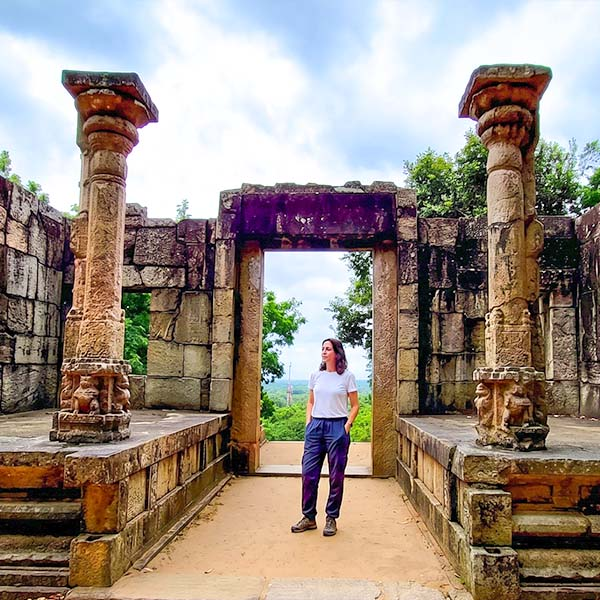
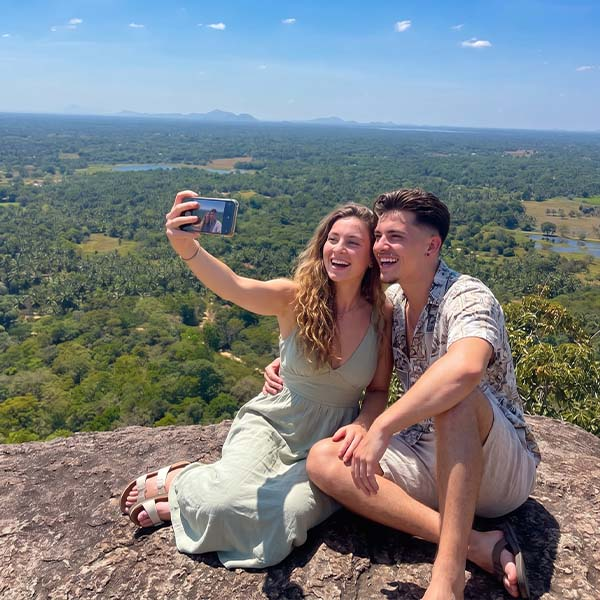
The Summit Climb: Past the stone doorway, a shaded forest trail continues up to the summit offering 360° views across the plains.
HOW TO GET TO YAPAHUWA
Fortunately,travelling to the Yapahuwa Rock Fortress is straightforward, since it sits near the town of Maho in the Kurunegala District.
| Origin | Distance / Time | Recommended Route |
| Colombo | ~117 km (approx. 3–3.5 hours) | Private car/taxi, or train from Colombo Fort to Maho Junction + tuk-tuk |
| Kandy | ~72 km (approx. 2.5 hours) | Private driver via Kurunegala. |
| Anuradhapura | ~65 km (approx. 1.5 hours) | A28 highway heading south via Padeniya. |
SUGGESTED DAY TRIP ITINERARIES: YAPAHUWA ROCK FORTRESS
To help you integrate Yapahuwa into your travel plan, here are two optimized routes:
1: Airport to Anuradhapura (En-Route Stop)
Specifically, if you are traveling north from Bandaranaike International Airport (CMB) or Negombo towards the Cultural Triangle, Yapahuwa serves as an ideal break along the journey:
- Route: Airport ->Kurunegala ->Yapahuwa Rock Fortress ->Anuradhapura.
Why it works: Specifically, It breaks up a long 4–5 hour drive into manageable segments while introducing you to medieval Sri Lankan history before reaching the ancient capital of Anuradhapura.
2: Day Trip from Sigiriya / Habarana
Alternatively,if you are based in Sigiriya or Habarana, Yapahuwa conversely can be explored alongside key nearby historical sites in a single day trip:
- Day Trip Itinerary:
- Awukana Buddha Statue: View the 42-foot standing rock-carved Buddha.
- Kalawewa Reservoir: Visit the ancient irrigation lake built by King Dhatusena.
- Yapahuwa Rock Fortress: Conclude the afternoon exploring the fortress and watching the sunset from the top.
For more travel ideas, check out our Sri Lanka Hill Country Tours package page to plan your entire historical itinerary.
TRAVEL TIPS
Specifically, the best time to visit is early morning or late afternoon to avoid the midday sun on the exposed granite rock face. Moreover, you should wear sturdy shoes for climbing, although you must remove them near active shrine areas
- Best Time to Visit: Early morning or late afternoon to avoid the midday sun on exposed granite rock face.
- Footwear: Wear sturdy shoes/trainers for climbing. You may be asked to remove shoes near active shrine areas
- Crowds: Unlike Sigiriya, the Yapahuwa Cave Temple and surrounding site remain quiet, seeing far fewer tourists.
FREQUENTLY ASKED QUESTIONS (FAQ)
Yapahuwa is open daily from 7:00 AM to 5:00 PM. Ticket prices are approximately $10 USD for foreign adults and 100 LKR for locals. (Subject to change).
The climb takes roughly 20 to 30 minutes each way. Plan for 1.5 to 2.5 hours total to explore the base museum, staircase, and summit ruins comfortably.
The climb is moderately steep. While the ornamental staircase has high stone steps, the overall trek is shorter than Sigiriya or Pidurangala. Proper walking shoes are highly recommended.
Because there is an active Buddhist temple at the base of the rock, visitors should dress respectfully with knees and shoulders covered. Light, breathable clothing is best for the warm climate.